
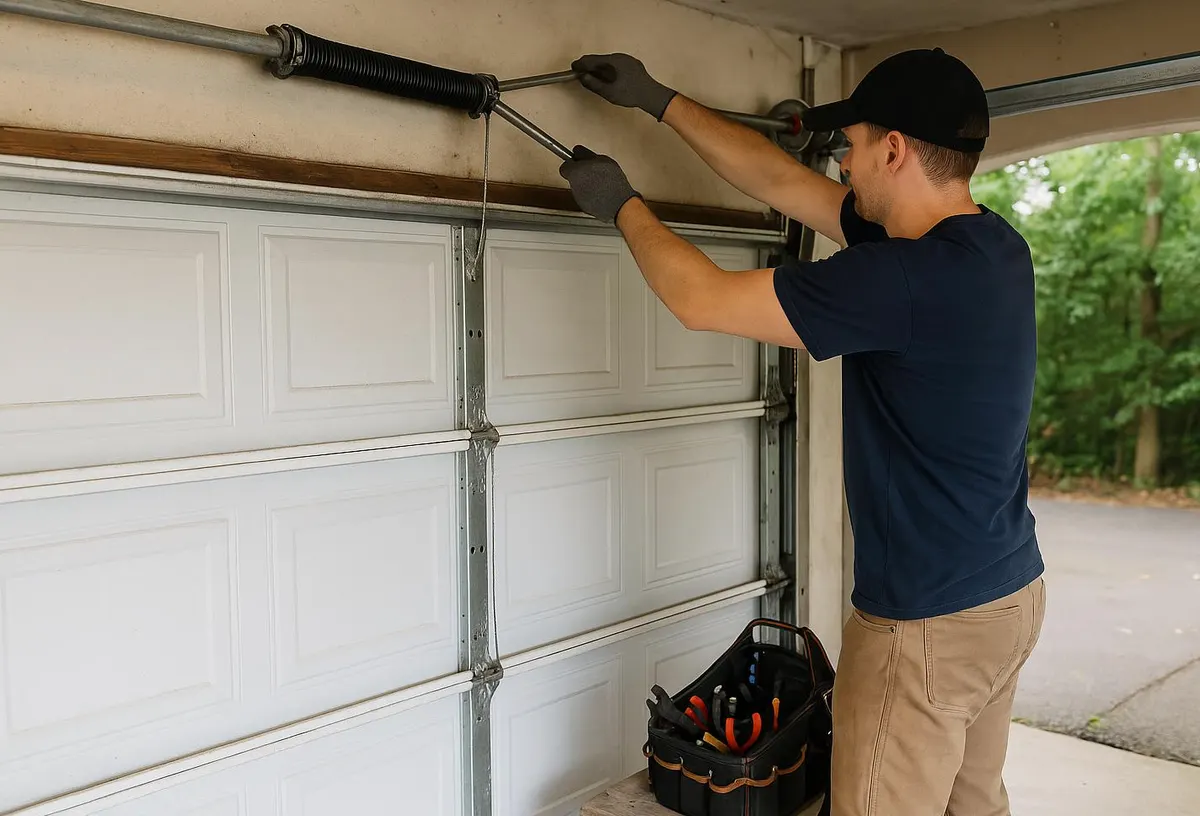
The Mistake Almost Everyone Makes
Most homeowners wait for one clear signal before they think about garage door springs: a loud bang and a door that won't budge. It's an easy mistake to make because a worn spring doesn't stop the door from working right away. The opener can still lift and lower it, the door can still look level, and everything can feel fine for weeks or months while the spring is quietly losing tension. By the time it actually snaps, it's usually failing suddenly, under load, not gradually in a way you'd notice day to day. The real signs show up earlier, if you know where to look.
Springs in this part of Florida work harder than in drier climates. Humidity and afternoon downpours keep moisture in the air almost year-round, and that moisture speeds up corrosion on exposed steel coils. Add in the extra open-close cycles that come with storm prep and manual operation during power outages, and springs here can wear out faster than the generic 7-10 year estimate suggests.
The Garage Door Spring Checklist
1. Listen to the door as it opens
Stand near the door and run it through a full cycle. A healthy torsion spring is nearly silent. Grinding, popping, or a sharp metallic screech as the spring winds and unwinds usually means the coils are rubbing unevenly, a sign of fatigue or a bent shaft. If you hear it, don't ignore it just because the door still moves.
2. Check the coil gaps on a torsion spring
Look at the torsion spring mounted above the door. The coils should sit close together with even spacing. A visible gap between coils, especially one that wasn't there before, means the spring has stretched and lost some of its holding tension. This is one of the clearest pre-failure signs you can spot with your eyes.
3. Look for stretching on extension springs
If your system uses extension springs along the horizontal tracks instead, check their length against the safety cables running through them. A spring that looks longer than it used to, or has gaps opening up between coils under light load, is losing elasticity. Once that starts, it accelerates.
4. Inspect for rust and flaking coating
Run a hand along the spring (door closed, opener disconnected) and look for rust spots, pitting, or flaking paint. In a humid climate, this is often the first visible symptom of wear, long before any mechanical failure. Rust eats into the metal's surface and creates weak points where a spring is more likely to crack under tension.
5. Do a manual balance test
Disconnect the opener by pulling the release cord, then lift the door by hand to about waist height and let go. A properly tensioned spring will hold the door in place. If it drifts down on its own, crashes shut, or feels noticeably heavier than it used to, the spring is no longer carrying its share of the load.
6. Watch for uneven movement
Open and close the door while watching both sides of the track. If one side lags, the door tilts slightly, or it looks like it's twisting as it moves, one spring is doing more work than the other. This uneven strain speeds up failure on the weaker spring and puts extra stress on cables and rollers too.
7. Pay attention to the opener
If your opener motor has started sounding strained, taking longer to lift the door, or tripping a breaker occasionally, it may be compensating for a spring that's lost tension. Openers aren't designed to lift a door's full weight alone, and pushing one to do that shortens its life along with the spring's.
8. Count the years and the cycles
Most springs are rated for a set number of open-close cycles, often in the 10,000 range for standard residential use. If you run the door multiple times a day, every day, for storm checks or daily use, do the math on roughly how many cycles your current springs have seen. Age alone isn't the full story, but it's a useful gut check alongside everything else on this list.
When to Call Alturas Garage Door Pro
If two or more items on this list sound familiar, it's worth getting a second set of eyes on it before the spring fails on its own schedule, not yours. Alturas Garage Door Pro handles garage door spring repair for both torsion and extension systems, and can pair it with a full garage door tune-up and maintenance visit to check cables, rollers, and balance at the same time, so you're not back here again in six months.
If you're in Alturas, Bartow, Lake Wales, Frostproof, Fort Meade, Mulberry, Homeland, or Waverly and any of these warning signs sound familiar, give us a call. We'll check the springs, tell you honestly what shape they're in, and get it handled before it becomes an emergency.