
What Waiting Another Season Actually Costs You
Here's the argument in most households: one of you wants to replace the garage door before hurricane season winds down for good, the other wants to wait until "things slow down." Meanwhile the door stays exactly as it is — not rated for the wind loads this part of Florida sees, not permitted, and not run past the HOA. That delay isn't free. If a storm pushes through and the door fails, you're not just replacing a door anymore; you're dealing with water intrusion, drywall, insulation, and possibly a roof that lost pressure support once the garage door blew in. Insurance adjusters ask for permit documentation on storm claims. If there isn't any, or the door wasn't rated for the wind pressures it was supposed to resist, that claim can get a lot more complicated. And if your HOA finds an unapproved door sitting there for months, you're looking at fines stacking up on top of everything else. None of that requires a hurricane to go wrong — a non-compliant door can hold you up at resale too, when a buyer's inspector flags it.
Wind-Load Codes: The Part That's Non-Negotiable
This is the one nobody gets to argue about, because it isn't a preference — it's a building code requirement. Florida's wind-load standards exist because garage doors are one of the largest openings in a home's exterior, and if one fails during a storm, the pressure change inside the garage can blow out walls or lift the roof. A door that's rated for the wind pressures expected in your area is built with reinforced panels, stronger tracks, and heavier-duty hardware to resist that load.
When you're shopping for a replacement, the wind rating should be printed right on the product literature or label — it's not something a contractor eyeballs. If a salesperson can't tell you the pressure rating of a door, that's a sign to keep looking. This matters even more here because of the moisture side of the equation: humidity and afternoon downpours cause swelling and warping in lower-quality doors over time, and salt-tinged air (even well inland) accelerates rust on hardware that isn't built for it. A wind-rated door with corrosion-resistant hardware solves two problems with one purchase.
What This Means for the Argument
If one of you is pushing for the cheapest door available online, the wind-load requirement settles that fast — it has to meet code regardless of price. That's not a negotiable style choice; it's the baseline.
Permits: Not Optional, Not Complicated
A garage door replacement is a structural change to your home's exterior, which is why it typically requires a permit through your local building department before installation and an inspection afterward. The inspector isn't there to judge your taste — they're confirming the door that went in actually matches the wind rating it's supposed to have and was installed correctly enough to perform that way in a storm.
Skipping the permit might feel like it saves time now, but it shows up later: during a storm damage claim, during a home sale, or during an HOA dispute where the HOA asks for proof the work was done to code. A reputable installer pulls the permit as part of the job and handles the inspection scheduling — it shouldn't be something you're chasing down yourself.
HOA Rules: The Part That's Actually Flexible
This is where most of the household disagreement actually lives, because HOA requirements are about appearance, not safety. Panel style, color, window inserts, material finish — these are the things an HOA architectural committee typically wants to approve before installation, and they can vary a lot between communities. One spouse might love a modern flush-panel look; the HOA might require something that matches the neighborhood's existing carriage-style doors. That's a real compromise to have, but it's a separate conversation from the wind-load and permit requirements, which don't bend for aesthetics.
The practical move is to submit your door choice to the HOA for approval before you buy, not after. Reversing a purchase because the color or panel style got rejected costs more than waiting a few days for a yes.
Putting It Together
- Wind-load rating: required by code, not optional, applies to every replacement regardless of neighborhood.
- Permit: required for the structural work, handled through your local building department, confirms the installation matches the rating.
- HOA approval: required by your community's rules, covers appearance only, and is where personal preference actually gets a say.
Once you separate those three, the argument usually settles itself — the code and permit aren't up for debate, but the door's look is exactly where your preferences belong.
When to Call Alturas Garage Door Pro
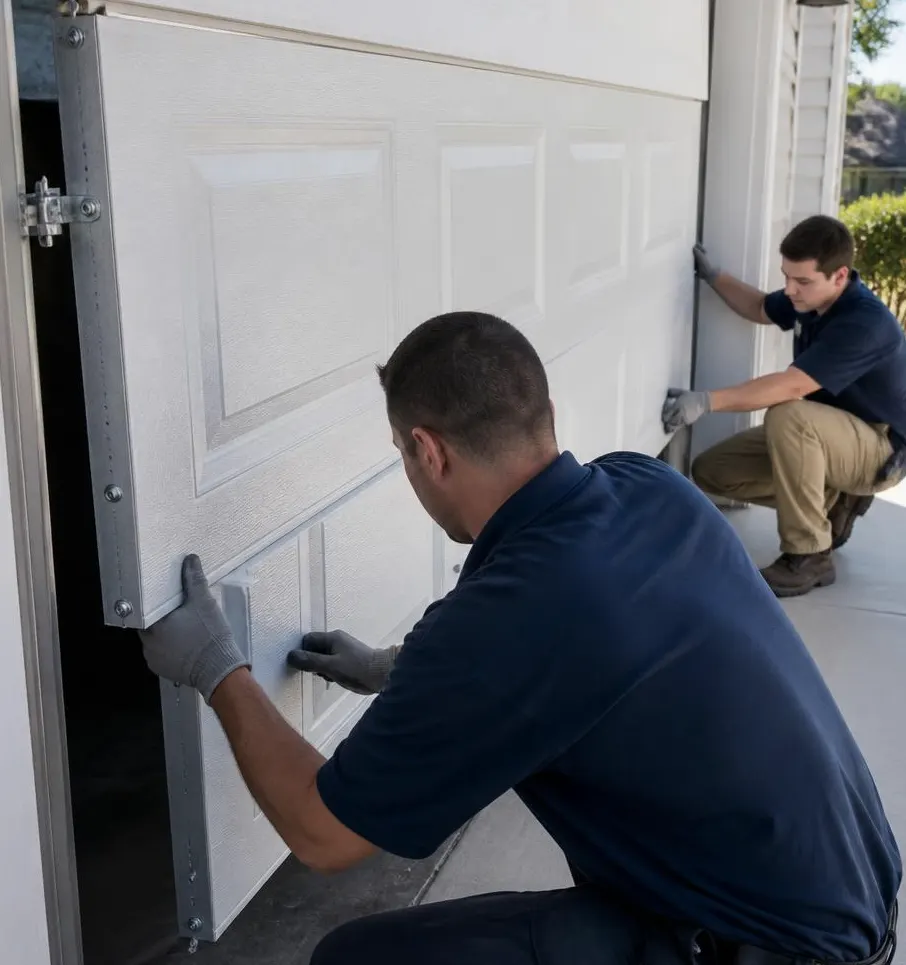
If you're not sure whether your current door even meets today's wind-load standards, or you want a replacement that's ready to submit for HOA approval and permitting without the back-and-forth, that's where we come in. Our Garage Door Opener Installation and Garage Door Panel Replacement services include guidance on wind-rated options that hold up to Polk County's storm season, plus the documentation you'll need for your building department and HOA paperwork. We also handle the inspection logistics so you're not the one tracking down a city office between work and everything else.
If your garage door is older, showing rust at the hardware, or you just want a straight answer about what code actually requires before the next storm system rolls through, call Alturas Garage Door Pro. We serve Alturas, Bartow, Lake Wales, Frostproof, Fort Meade, Mulberry, Homeland, and Waverly, and we'll help you get a door that satisfies the code, the permit office, and your HOA — in that order.